Ask what the assessment will answer
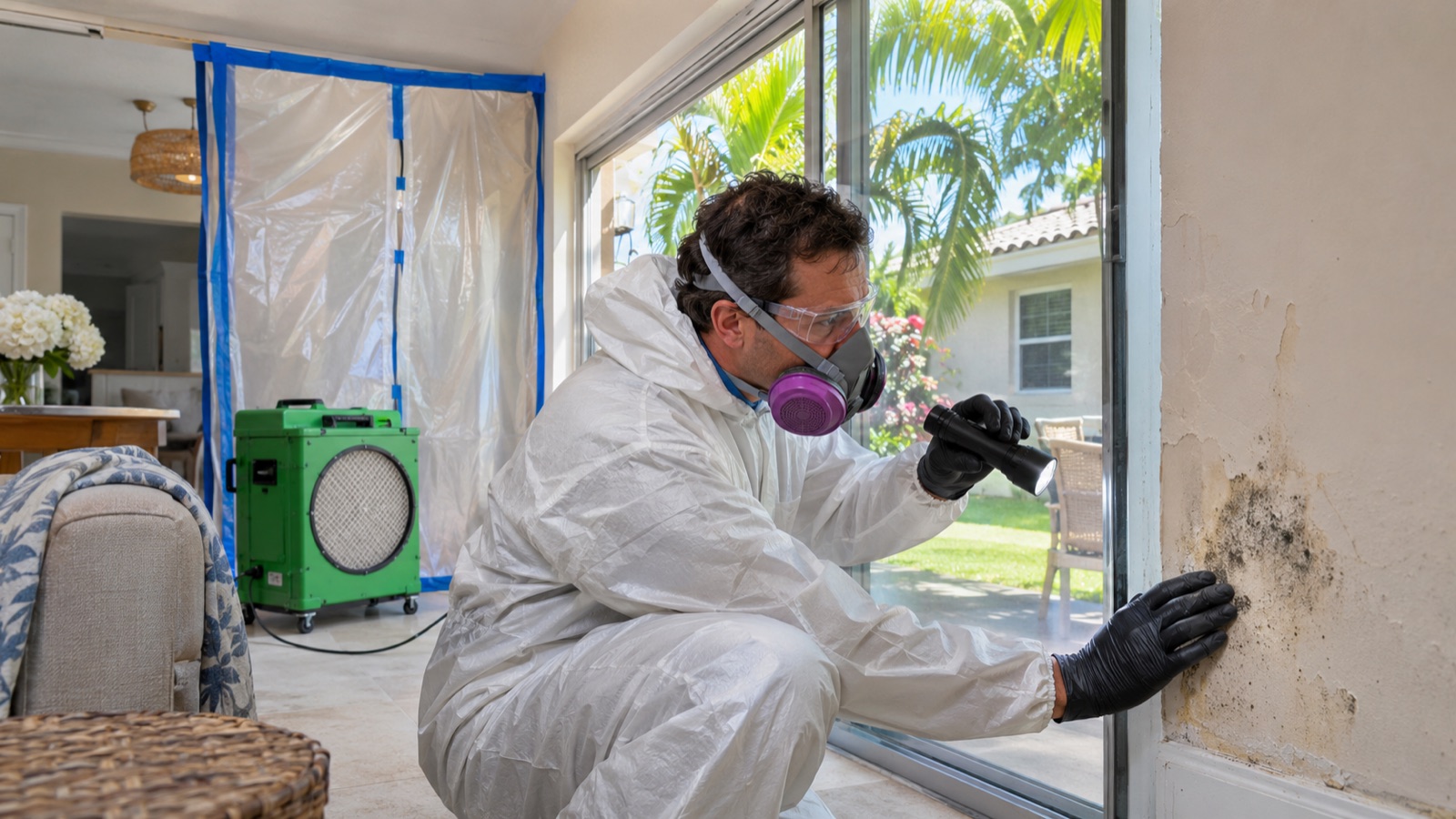
An assessment may help document conditions and define a remediation protocol. Sampling should have a clear purpose rather than being ordered only because a room smells musty. A qualified independent assessor can explain the methods and limitations of a report. Our cleanup discussion can then address the findings relevant to affected building materials.
Keep the professional roles clear
Florida regulates mold-related assessment and remediation through DBPR. Property owners can use its official resources to check credentials and understand the services being offered. Do not assume that a cleanup quote includes independent testing or final verification. Ask who will perform each role and what documents will be provided.
Use reports alongside the property history
A laboratory result does not fix a leak or describe every concealed condition. Share the timing of water damage, prior repairs, and rooms affected with the professionals involved. If additional material becomes accessible during cleanup, the scope may need review. The goal is to connect findings to practical work, rather than treating a single number as the whole answer.
Official resources for property owners
Let’s discuss the damage at your property
Call with the address and tell us where you found moisture or growth. Share any repair history or assessment report you already have. We can discuss access, availability, and the questions an on-site review should address.
Call (786) 705-7090