
Balcony Water Intrusion and Interior Mold in Miami Condos
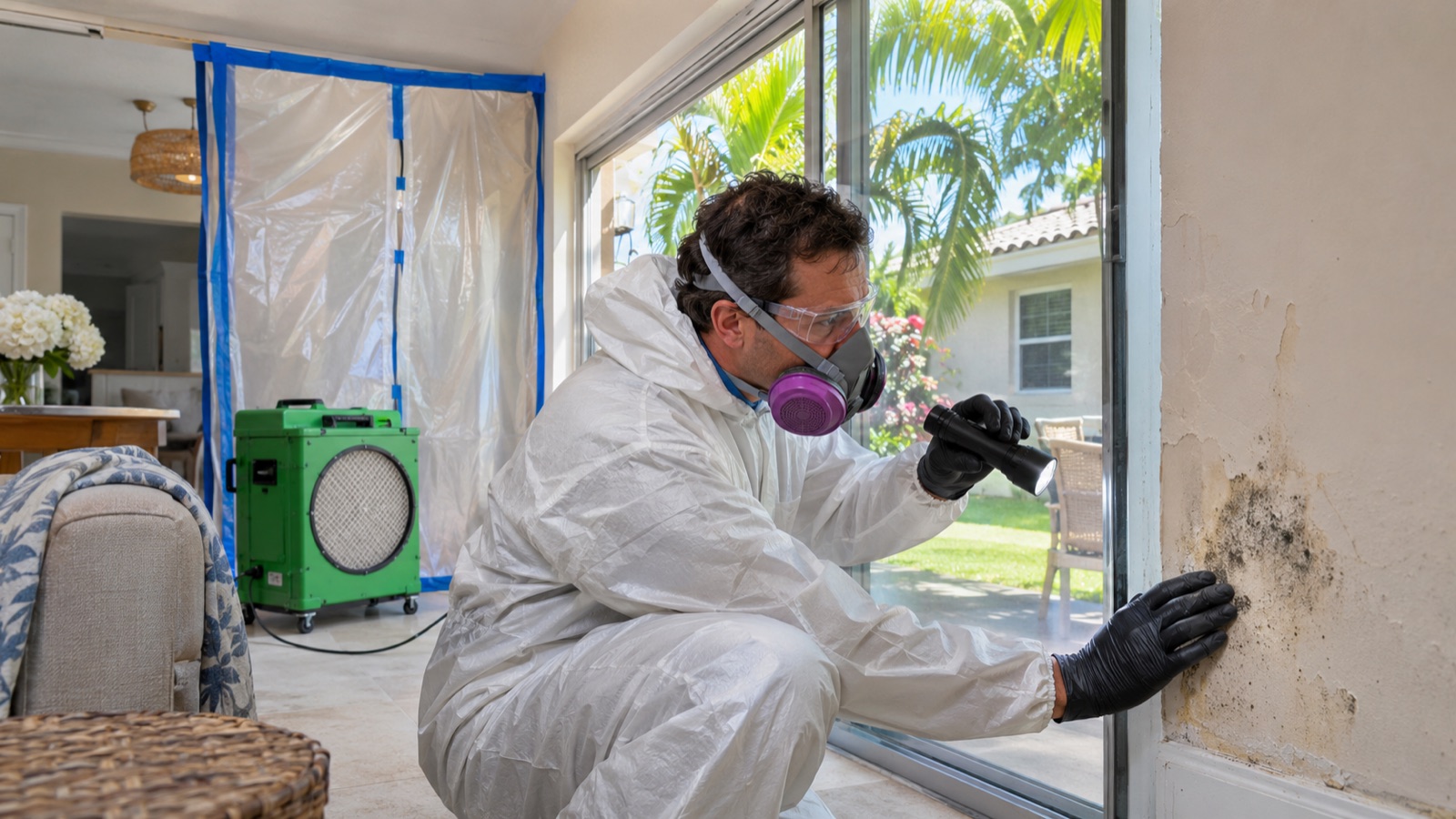
A damp wall below a balcony opening needs both a source investigation and an interior cleanup plan.
Read the details →Useful reading for condo owners, homeowners, and property managers dealing with damp buildings.
A ceiling leak from another unit raises different questions from rain at a sliding door. These guides address situations that owners and managers can describe to the contractor. They explain what to observe without disturbing affected materials. Each article links to relevant services so the next step is easy to find.
Online information cannot identify every concealed condition in a building. Keep a record of water events, repairs, and recurring stains to share during an evaluation. Building managers may also have reports that help explain a shared source. Use that information to ask focused questions about cleanup and repairs.
Browse articles about condo access, damp interiors, and practical cleanup planning. The advice is intended to help you explain the issue and understand the work proposed. It does not replace medical advice or an independent assessment. Call when you need to discuss conditions at a specific Miami-area address.
A damp wall below a balcony opening needs both a source investigation and an interior cleanup plan.
Read the details →What Miami unit owners can discuss with their property manager before ceiling repairs begin.
Read the details →Know what to observe when cooling has stopped and indoor spaces feel damp.
Read the details →Flooring edges and wall finishes can stay damp after a Miami rain event.
Read the details →A property manager’s guide to checking damp interiors before staff return.
Read the details →Useful observations for owners who return to a closed unit or rely on a local property manager.
Read the details →Small utility spaces can hide water damage behind appliances and finishes.
Read the details →Planning cleanup around merchandise, staff access, and hidden wall finishes.
Read the details →Describe moisture patterns so the right trade can investigate the source.
Read the details →A short planning guide for condo associations and commercial property managers.
Read the details →Musty odors and recurring stains are reasons to investigate moisture, not reasons to guess a species.
Read the details →Color does not tell you the species or establish how a person will react.
Read the details →A room’s odor can prompt investigation, but it cannot identify a mold species.
Read the details →Understand access restrictions and avoid disturbing affected material before the project is reviewed.
Read the details →The answer depends on the work location, access needs, and individual circumstances.
Read the details →Cleanup is followed by source repairs, sensible monitoring, and prompt attention to new leaks.
Read the details →Arrange a comfortable area away from work zones and ask a veterinarian about animal health concerns.
Read the details →Understand moisture meters, containment, and HEPA filtration without confusing tools with a complete repair.
Read the details →Call with the address and tell us where you found moisture or growth. Share any repair history or assessment report you already have. We can discuss access, availability, and the questions an on-site review should address.
Call (786) 705-7090